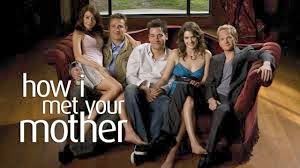
So the internet exploded earlier this week with people bashing and defending the How I Met Your Mother series finale. You can read just a few of the responses here, here and here. And if you haven't seen it yet (seriously, do you live under a rock?) SPOILERS AHEAD.
It took me days to gather my thoughts and to see if anyone else would share the same opinion as me, but so far, I come across two camps: a few scattered people who enjoyed the ending and defend it well, and a lot of upset folks who dismiss it and illustrate some OK points-- but mostly they're just disappointed emotionally, which doesn't seem like a valid argument to me.
I'd like to tackle the HIMYM ending from a different perspective.
1. It's OK that the mother died and that the story wasn't really about her: This is true to HIMYM form. A lot of Ted's mini lessons to his kids over the seasons were that the conclusion drawn at the end of the story was not the expected outcome. How many times was he looking for X but really wanted Y, etc etc. HIMYM is full of "things aren't always what they seem" morals. So it's perfectly true to form that the entire series "mislead" viewers and that the real purpose of the story, the hidden meaning that Ted only discovers later, wasn't 100% meeting The Mother.
2. That doesn't mean he had to go back to Robin: If there's one big thing HIMYM teaches, it's that timing is everything. Ted and Robin never got the timing right and the show strove to demonstrate that even if things are just a wee but off in your relationship, you probably aren't meant to be. It was subtle and full of character development, but not concluding with Ted and Robin back together could have been the most profound thing the writers ever did. This isn't the cheesy Friends ending where Rachel gets off the plane. We expected more from HIMYM. I would have preferred not to have a pretty bow tied on a too-happy ending. We didn't need things "wrapped up" and it would have shown more character development for Ted to be OK without romantic love in his life at the time of the finale.
3. Downright gross and inappropriate: Was anybody else CREEPED THE FUCK OUT by the way Robin wanted Ted on his wedding day and on subsequent occasions when Tracey was present? That's just sour grapes. And it's kind of a terrible friendship when instead of being happy for someone you've conveniently fallen back in love with them just because you're not OK being alone. That showed an ugly side of Robin I didn't want to see. Let's just say that on my wedding day, I really DON'T want one of my best friends to be secretly in love with me -- because it's not real love anyway. True love isn't some misplaced longing and yearning: it's sitting at a hospital bed at 3 a.m. and changing someone's colonoscopy bag. I'm a staunch believer that thinking you're in love with someone, when that love is unrequited no less, isn't real love. It's wrong. People were right when they asked if Robin and/or Ted murdered Tracey.
And seriously, side note: who would ever spark up a romantic relationship with your friend's ex-wife? Not cool.
4. The hypocrisy: Ted and Robin back together prove that a lot of Ted's exes were right: Robin was a "threat" and they had legitimate reasons for dumping Ted because of her. Ladies, the moral of this story is, if you boyfriend still hangs out with his ex, run. Run far away. Tracey should've bolted.
5. What the story was really about: It's totally fine that Tracey dies-- illustrating that life isn't always neat, tidy, or perfect. Fine. But first, the writers could've executed it (pun) better. As has been said, to Ted and the kids, Tracey has been dead six years. To us, six seconds. That's sloppy writing. But I do love the concept that Ted's daughter brings up "The story isn't really about how you met Mom. What's it's really about is..." NOT ROBIN. What was this story about? IT WAS ABOUT FRIENDSHIP. Plain and simple it was about the ups and downs of friendship as the foundation of you LIFE, as the rock that strengthens you when romantic love fails you. Over and over through nine seasons of failed dates and relationships, Ted's life was made wonderful by his FRIENDS. The story wasn't about JUST Robin. It was about all of them, together. It was about platonic love.
6. The ending I would have written: I would have written something similar; it seems legit that with careers and babies and divorce, friends grow apart. Fine. You know what I would've written? Ted's daughter identifies that the point of the story was the power of friendship and encourages Ted to call up his old gang. Maybe together with Lily, Marshall and Barney, they all go to Robin's apartment and they all collectively persuade her back into the group with a blue french horn. No romance necessary for Ted and Robin. Just friendship. Because friendship is enough. Wouldn't it have been a grand surprise ending that not everyone ends up with a soul-mate? Not everyone needs to be in a relationship? Love doesn't conquer all and at 50 years old, they're OK with that? That would have been a classier ending than the one we were served. But just about anything would have been.
**Also, was anybody else bothered by this? Robin is supposedly a world-travelling journalist and her careerism breaks up her relationship with Barney, and yet she somehow has SEVERAL DOGS??? You can't have dogs and travel the world, you terrible pet owner, Robin. And if the dogs were a "subtle way of showing that she's slowed down and isn't travelling anymore"... then why would she end up with Ted over Barney? The only flaw we ever saw in her and Barney's relationship was her careerism, because Barney vowed always to tell her the truth (the other potential flaw thus eliminated). If the show wants us to suspend disbelief and treat these characters and well-rounded, fully fleshed-out humans, then NO, Barney and Ted aren't INTERCHANGEABLE.
Let us know your thoughts. Am I right? Wrong? Super totally wrong? Could you have written a better ending? Don't forget to Tweet, 'Gram, Tumblr and Pin us!
Gotta book it
xoxo
JEM
Showing posts with label writers. Show all posts
Friday, 4 April 2014
Friday, 7 February 2014
The February Novel
In late January, there was a rare gathering of friends from all across Ontario and Quebec. We managed to squeeze in almost a full 48 hours together before the grown-ups had to return to their jobs and the "adult children at home" had to get back to their fruitless job hunting. It was a magical weekend; we often see one another one-on-one, but for almost the whole gang to be in the same room again was intensely special.
We weren't what I'd call a "dorky" crew during our undergrad days; sure, we did well at school, but we also drank like fish and smoked and passed out in weird places and dated hot heart-breakers. Normal BA stuff.
But as we sat around in my bud's living room, getting progressively drunker on cheap beer and even cheaper wine, the conversation - which had started with normal catching up- quickly took on a literary tone.
It was probably one of the most genuine, enthusiastic talks I've ever had with this group and that's saying something, because this crew consists of some of my very best friends. Everybody- guys and girls- just wanted to talk about what they were reading now, what they'd read back then, which books were going to make great movies, and what they'd write if they had the chance. Keep in mind, only one of us there (me) is a self-identified "writer". We were a motley crew of history majors, education majors, sociology & poli-sci double majors and one long English major. Who woulda thunk we'd come together over books?
Anyway, the drinks kept flowing and some revelations were revealed. Apparently, a lot of us used to write when we were younger. I didn't share with the gang that I had just recently tossed all my high school notebooks, including the 350 hand-written page notebook.
But at some point between the fourth and fifth glasses of Red, one of my adorable teacher friends piped up: "Hey! We should all write novels in February!"
And so a pact was made: we would each shoot for 1,000 words a day, from February 1-28th, resulting in a short novel approximately 28,000 words long. At the end of the month, we'll share our novels with each other. So I should have four novels to read by month's end.
We're now seven days into February and most of us admittedly are rather behind. Personally, I only have about 1,300 words so far. BUT I'm loving actually writing again. My brain is constantly churning, searching for inspiration, filing away ideas for later... it's like a winter miracle. In fact, I'm rushing this post a little so that I can procrastinate on job hunting and get writing again! I might even enter the draft in a contest or something, if it holds up after editing. If not, at least I got my writer's mojo back.
If you want to write a February Novel: it's not too late!
1. Don't waste time comparing ideas, paralyzed by the thought of "choosing the wrong one". Just pick something and go with it. I was afraid to write a cop novel because I thought I was limiting myself with the genre. I was also worried about writing something that the guys wouldn't want to read. That was just an excuse to not get started earlier.
2. Just write; don't edit. Some people are getting bogged down thinking their words are crap-- that's not the point of the exercise. In this case, we really are going for quantity not quality. Because as a writer, you're your own worst enemy.
3. Set a reasonable goal, like say 500 words a day. Don't beat yourself up if you miss a day-- and don't stop if you're on a roll!
4. Do it with someone! A lover, a friend, your book club. You'll need someone to hold you accountable, and I am literally SO STOKED to read my friends' novels. This is definitely a project that's meant to be shared.
5. Tweet, instagram, pin and let us know how your own #FebruaryNovel is coming along.
Gotta book it
xox
JEM
We weren't what I'd call a "dorky" crew during our undergrad days; sure, we did well at school, but we also drank like fish and smoked and passed out in weird places and dated hot heart-breakers. Normal BA stuff.
But as we sat around in my bud's living room, getting progressively drunker on cheap beer and even cheaper wine, the conversation - which had started with normal catching up- quickly took on a literary tone.
It was probably one of the most genuine, enthusiastic talks I've ever had with this group and that's saying something, because this crew consists of some of my very best friends. Everybody- guys and girls- just wanted to talk about what they were reading now, what they'd read back then, which books were going to make great movies, and what they'd write if they had the chance. Keep in mind, only one of us there (me) is a self-identified "writer". We were a motley crew of history majors, education majors, sociology & poli-sci double majors and one long English major. Who woulda thunk we'd come together over books?
Anyway, the drinks kept flowing and some revelations were revealed. Apparently, a lot of us used to write when we were younger. I didn't share with the gang that I had just recently tossed all my high school notebooks, including the 350 hand-written page notebook.
But at some point between the fourth and fifth glasses of Red, one of my adorable teacher friends piped up: "Hey! We should all write novels in February!"
And so a pact was made: we would each shoot for 1,000 words a day, from February 1-28th, resulting in a short novel approximately 28,000 words long. At the end of the month, we'll share our novels with each other. So I should have four novels to read by month's end.
We're now seven days into February and most of us admittedly are rather behind. Personally, I only have about 1,300 words so far. BUT I'm loving actually writing again. My brain is constantly churning, searching for inspiration, filing away ideas for later... it's like a winter miracle. In fact, I'm rushing this post a little so that I can procrastinate on job hunting and get writing again! I might even enter the draft in a contest or something, if it holds up after editing. If not, at least I got my writer's mojo back.
If you want to write a February Novel: it's not too late!
1. Don't waste time comparing ideas, paralyzed by the thought of "choosing the wrong one". Just pick something and go with it. I was afraid to write a cop novel because I thought I was limiting myself with the genre. I was also worried about writing something that the guys wouldn't want to read. That was just an excuse to not get started earlier.
2. Just write; don't edit. Some people are getting bogged down thinking their words are crap-- that's not the point of the exercise. In this case, we really are going for quantity not quality. Because as a writer, you're your own worst enemy.
3. Set a reasonable goal, like say 500 words a day. Don't beat yourself up if you miss a day-- and don't stop if you're on a roll!
4. Do it with someone! A lover, a friend, your book club. You'll need someone to hold you accountable, and I am literally SO STOKED to read my friends' novels. This is definitely a project that's meant to be shared.
5. Tweet, instagram, pin and let us know how your own #FebruaryNovel is coming along.
Gotta book it
xox
JEM
Labels:
activities,
author,
book,
bookish,
career,
create,
february,
FebruaryNovel,
literature,
nerds,
novellife,
novels,
try,
winterblues,
write,
writers
Sunday, 12 January 2014
Liar Liar...English Hire?!
So a couple of weeks ago, something incredible happened. My heart was pounding, my eyes widened as my sense of hope elevated and my mouth seemed frozen open as though stuck on the "O" of "O-M-G". No, I didn't see my true love at first site, and no, it wasn't really good porn. It was a simple article on Facebook, entitled "Why English Majors are the hot new hires" which I have posted here for your viewing pleasure.
https://www.openforum.com/articles/why-english-majors-are-the-hot-new-hires/
My reaction to the article occurred in stages. First, was the excitement at seeing the title and thinking "Yes! Someone is finally realizing my worth! Employment here I come!" Then I actually started reading the article. Bruna Martinuzzi, the author of the article, makes some valid points about the often underrated qualities and qualifications that English majors bring to the table. Things like excellent communication and writing skills, and a strong hand in critical thinking. While I would argue, slightly biased of course, that English majors undergo the most rigorous training in critical thinking of all the liberal arts majors, the reality is that critical thinking, along with the other skills Martinuzzi lists, is not limited to the English major alone. In fact, the entire arts spectrum underscores the importance of logical argumentation and clear, concise communication, so the article's claims for English majors could as easily be made for History, Philosophy, Sociology and Political Science as well. Furthermore, the social science disciplines actually have one-up on us arts students in the research department, as they are required to take statistics courses which only augment employers' confidence in their ability to research and analyze material.
And here's another kicker (and where my original excitement downspirals into cynicism). Any of the jobs I have applied to that list "excellent written and oral skills" or "editing and proofreading" among its ideal applicant's key qualifications second these skills to a very specific education, often including a degree in Communications or Journalism; even a Business Administration degree is requested for the most menial of jobs! The skill set Martinuzzi lists appears after these very specific qualifications, which leads one to wonder which of the two will be considered more favorably by the employer. Will it be enough that I am an excellent communicator with years of experience editing and writing for professionals, but I'm also an English major? Or would they rather have a Business Admin degree, even if that means having to look over every article produced to ensure our dependable business student used the correct "there" in their writing?
What's worse is the reality that it does not necessarily have to be one or the other anymore. Nowadays, good writing practices are being more emphasized across the social sciences and even outside the liberal arts discipline. Many science students are required to take an English Literature course and, having served as a teaching assistant for one of those courses recently, I can attest to the fact that despite a science or engineering background, many non-arts students write with the capability of those of us who specialize in the art of communication and argumentation. An English major alone is rarely enough to satisfy. Those job postings that require "excellent communication and written skill" always come with an additional caveat that run-of-the-mill English majors may not be able to fulfill. Want to edit stories for the news? You need excellent communication skills AND a degree in television broadcasting. Want to work as a research assistant? You need thorough research skills AND demonstrated experience in statistics. An English major alone is realistically insufficient.
Ultimately, it saddens me to say that Martinuzzi's article fails to answer the "why" question. Why hire an English major, specifically, when there are all sorts of other disciplines out there that arm students with similar skills and qualifications? The dreamer in me wants to believe that she is right, that there is something special and unique about those of us who study literature, with which other arts programs simply cannot compare. But the truth of the matter is, the title of the article could just have easily read "why arts majors are the hot new hires", hitting home the reality that despite any corporate move towards the arts, we still have an outrageous number of equally qualified candidates to compete against for the ever decreasing number of jobs available.
In the mean time, we struggle onwards with the hope of finding employment that will motivate us to get up every morning and do our best, while maintaining the reassurance that even if we are "merely" English majors, at least we have one hell of a library.
https://www.openforum.com/articles/why-english-majors-are-the-hot-new-hires/
My reaction to the article occurred in stages. First, was the excitement at seeing the title and thinking "Yes! Someone is finally realizing my worth! Employment here I come!" Then I actually started reading the article. Bruna Martinuzzi, the author of the article, makes some valid points about the often underrated qualities and qualifications that English majors bring to the table. Things like excellent communication and writing skills, and a strong hand in critical thinking. While I would argue, slightly biased of course, that English majors undergo the most rigorous training in critical thinking of all the liberal arts majors, the reality is that critical thinking, along with the other skills Martinuzzi lists, is not limited to the English major alone. In fact, the entire arts spectrum underscores the importance of logical argumentation and clear, concise communication, so the article's claims for English majors could as easily be made for History, Philosophy, Sociology and Political Science as well. Furthermore, the social science disciplines actually have one-up on us arts students in the research department, as they are required to take statistics courses which only augment employers' confidence in their ability to research and analyze material.
And here's another kicker (and where my original excitement downspirals into cynicism). Any of the jobs I have applied to that list "excellent written and oral skills" or "editing and proofreading" among its ideal applicant's key qualifications second these skills to a very specific education, often including a degree in Communications or Journalism; even a Business Administration degree is requested for the most menial of jobs! The skill set Martinuzzi lists appears after these very specific qualifications, which leads one to wonder which of the two will be considered more favorably by the employer. Will it be enough that I am an excellent communicator with years of experience editing and writing for professionals, but I'm also an English major? Or would they rather have a Business Admin degree, even if that means having to look over every article produced to ensure our dependable business student used the correct "there" in their writing?
What's worse is the reality that it does not necessarily have to be one or the other anymore. Nowadays, good writing practices are being more emphasized across the social sciences and even outside the liberal arts discipline. Many science students are required to take an English Literature course and, having served as a teaching assistant for one of those courses recently, I can attest to the fact that despite a science or engineering background, many non-arts students write with the capability of those of us who specialize in the art of communication and argumentation. An English major alone is rarely enough to satisfy. Those job postings that require "excellent communication and written skill" always come with an additional caveat that run-of-the-mill English majors may not be able to fulfill. Want to edit stories for the news? You need excellent communication skills AND a degree in television broadcasting. Want to work as a research assistant? You need thorough research skills AND demonstrated experience in statistics. An English major alone is realistically insufficient.
Ultimately, it saddens me to say that Martinuzzi's article fails to answer the "why" question. Why hire an English major, specifically, when there are all sorts of other disciplines out there that arm students with similar skills and qualifications? The dreamer in me wants to believe that she is right, that there is something special and unique about those of us who study literature, with which other arts programs simply cannot compare. But the truth of the matter is, the title of the article could just have easily read "why arts majors are the hot new hires", hitting home the reality that despite any corporate move towards the arts, we still have an outrageous number of equally qualified candidates to compete against for the ever decreasing number of jobs available.
In the mean time, we struggle onwards with the hope of finding employment that will motivate us to get up every morning and do our best, while maintaining the reassurance that even if we are "merely" English majors, at least we have one hell of a library.
Subscribe to:
Posts (Atom)