So the internet exploded earlier this week with people bashing and defending the How I Met Your Mother series finale. You can read just a few of the responses here, here and here. And if you haven't seen it yet (seriously, do you live under a rock?) SPOILERS AHEAD.
It took me days to gather my thoughts and to see if anyone else would share the same opinion as me, but so far, I come across two camps: a few scattered people who enjoyed the ending and defend it well, and a lot of upset folks who dismiss it and illustrate some OK points-- but mostly they're just disappointed emotionally, which doesn't seem like a valid argument to me.
I'd like to tackle the HIMYM ending from a different perspective.
1. It's OK that the mother died and that the story wasn't really about her: This is true to HIMYM form. A lot of Ted's mini lessons to his kids over the seasons were that the conclusion drawn at the end of the story was not the expected outcome. How many times was he looking for X but really wanted Y, etc etc. HIMYM is full of "things aren't always what they seem" morals. So it's perfectly true to form that the entire series "mislead" viewers and that the real purpose of the story, the hidden meaning that Ted only discovers later, wasn't 100% meeting The Mother.
2. That doesn't mean he had to go back to Robin: If there's one big thing HIMYM teaches, it's that timing is everything. Ted and Robin never got the timing right and the show strove to demonstrate that even if things are just a wee but off in your relationship, you probably aren't meant to be. It was subtle and full of character development, but not concluding with Ted and Robin back together could have been the most profound thing the writers ever did. This isn't the cheesy Friends ending where Rachel gets off the plane. We expected more from HIMYM. I would have preferred not to have a pretty bow tied on a too-happy ending. We didn't need things "wrapped up" and it would have shown more character development for Ted to be OK without romantic love in his life at the time of the finale.
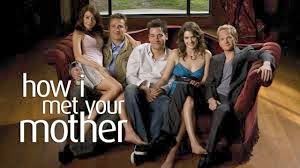
3. Downright gross and inappropriate: Was anybody else CREEPED THE FUCK OUT by the way Robin wanted Ted on his wedding day and on subsequent occasions when Tracey was present? That's just sour grapes. And it's kind of a terrible friendship when instead of being happy for someone you've conveniently fallen back in love with them just because you're not OK being alone. That showed an ugly side of Robin I didn't want to see. Let's just say that on my wedding day, I really DON'T want one of my best friends to be secretly in love with me -- because it's not real love anyway. True love isn't some misplaced longing and yearning: it's sitting at a hospital bed at 3 a.m. and changing someone's colonoscopy bag. I'm a staunch believer that thinking you're in love with someone, when that love is unrequited no less, isn't real love. It's wrong. People were right when they asked if Robin and/or Ted murdered Tracey.
And seriously, side note: who would ever spark up a romantic relationship with your friend's ex-wife? Not cool.
4. The hypocrisy: Ted and Robin back together prove that a lot of Ted's exes were right: Robin was a "threat" and they had legitimate reasons for dumping Ted because of her. Ladies, the moral of this story is, if you boyfriend still hangs out with his ex, run. Run far away. Tracey should've bolted.
5. What the story was really about: It's totally fine that Tracey dies-- illustrating that life isn't always neat, tidy, or perfect. Fine. But first, the writers could've executed it (pun) better. As has been said, to Ted and the kids, Tracey has been dead six years. To us, six seconds. That's sloppy writing. But I do love the concept that Ted's daughter brings up "The story isn't really about how you met Mom. What's it's really about is..." NOT ROBIN. What was this story about? IT WAS ABOUT FRIENDSHIP. Plain and simple it was about the ups and downs of friendship as the foundation of you LIFE, as the rock that strengthens you when romantic love fails you. Over and over through nine seasons of failed dates and relationships, Ted's life was made wonderful by his FRIENDS. The story wasn't about JUST Robin. It was about all of them, together. It was about platonic love.
6. The ending I would have written: I would have written something similar; it seems legit that with careers and babies and divorce, friends grow apart. Fine. You know what I would've written? Ted's daughter identifies that the point of the story was the power of friendship and encourages Ted to call up his old gang. Maybe together with Lily, Marshall and Barney, they all go to Robin's apartment and they all collectively persuade her back into the group with a blue french horn. No romance necessary for Ted and Robin. Just friendship. Because friendship is enough. Wouldn't it have been a grand surprise ending that not everyone ends up with a soul-mate? Not everyone needs to be in a relationship? Love doesn't conquer all and at 50 years old, they're OK with that? That would have been a classier ending than the one we were served. But just about anything would have been.
**Also, was anybody else bothered by this? Robin is supposedly a world-travelling journalist and her careerism breaks up her relationship with Barney, and yet she somehow has SEVERAL DOGS??? You can't have dogs and travel the world, you terrible pet owner, Robin. And if the dogs were a "subtle way of showing that she's slowed down and isn't travelling anymore"... then why would she end up with Ted over Barney? The only flaw we ever saw in her and Barney's relationship was her careerism, because Barney vowed always to tell her the truth (the other potential flaw thus eliminated). If the show wants us to suspend disbelief and treat these characters and well-rounded, fully fleshed-out humans, then NO, Barney and Ted aren't INTERCHANGEABLE.
Let us know your thoughts. Am I right? Wrong? Super totally wrong? Could you have written a better ending? Don't forget to Tweet, 'Gram, Tumblr and Pin us!
Gotta book it
xoxo
JEM
Showing posts with label TV. Show all posts
Friday, 4 April 2014
Saturday, 4 January 2014
Orange really IS the new black (minor spoiler warning)
This autumn I, like millions of other people, binge-watched Netflix's hit new series Orange is the new Black. I love it. Some of my friends hate it; I still don't understand why. This show is just so miraculous on so many levels: it sends me on a roller-coaster of emotions-- and I love when an artist (in any medium) can make me feel. And this show so celebrates women: all types of women, different races and sizes and sexualities, their flaws and their survival skills, their incredible ability to bear suffering.
But at the end of the season, which, if you haven't seen it, is pretty scary and horrifying and violent, I HAD to know: is this real? Do prisons in the US actually work like that? Because what the show depicts in microscopic detail is corruption on a level so deep, it's a wonder the country even holds together.
Now, I have the memory of a goldfish, so it was a complete surprise to me when my mother-in-law gave me the book (same title as the show) for Christmas. It's a slim paperback (just 299 pages including the afterword.) And it's a fast-paced read that I careened through. Couldn't. Put. It. Down.
Piper Kerman (the author, upon whom the main character of the TV series, Piper Chapman, is based) ends up spending 13 months of a 15 month sentence in a women's prison 10 years after her non-violent drug crime. In that time, she experience degradation, the ineffectuality and indifference of institutions, and of course, powerful doses of love, support, ingenuity, friendship and camaraderie of a motley crew of people brought together in dire circumstances. But the book is rather light on some of the show's juiciest details: one guard's intense homophobia (specifically against lesbians), one warden's downright criminal running of the prison (from the hint that she stole prison budget for her fancy car to threatening colleagues to covering up a rape), and Piper's affair with her ex-lover, (Nora in the book, Alex in the show). Plus, the lecherous and "rapey" guard Mendez.
If the book's silence on these issues is to be believed, then Netflix is just taking creative license; and there's nothing wrong with that. But Kerman is an advisor on the show's writing team. I have to wonder if she kept some stuff out of the book and is revealing it to the writers.
I have to say, OITNB was a bit of a harrowing read. Kerman writes well, but the stuff she relates is hard enough to bear, even without Netflix's lurid additions. I was thrilled and relieved every time I would reach a chapter I'd seen in the show and it turned out actually "easier" than what I'd viewed.
The biggest difference is that Kerman writes in this mature, Zen voice and doesn't make the mistakes her TV counterpart makes-- and nor are the people surrounding her as exaggerated. The show tries to elicit debate about the heroine's merits: she is accused of being selfish, flighty, changeable and whiny. Kerman gets no such abuse and doesn't appear to deserve it. Whether that is the way "things actually went down" or whether Kerman is painting herself in a flattering light and TV writers had to "dress her down", I don't know.
But in both forms, what draws me to this saga is the fantastic depiction of female relationships; they ring so true to me. Watching and reading OITNB is like looking out a dark lake on an overcast day: the water is black and frightening. But every now and then, the sun bursts through the clouds in a tiny ray, and the water flashes blinding gold. Those are the gems, the tiny moments of female companionship that are so moving, so true to life, and so precious.
But at the end of the season, which, if you haven't seen it, is pretty scary and horrifying and violent, I HAD to know: is this real? Do prisons in the US actually work like that? Because what the show depicts in microscopic detail is corruption on a level so deep, it's a wonder the country even holds together.
Now, I have the memory of a goldfish, so it was a complete surprise to me when my mother-in-law gave me the book (same title as the show) for Christmas. It's a slim paperback (just 299 pages including the afterword.) And it's a fast-paced read that I careened through. Couldn't. Put. It. Down.
![]() |
| the book cover. |
Piper Kerman (the author, upon whom the main character of the TV series, Piper Chapman, is based) ends up spending 13 months of a 15 month sentence in a women's prison 10 years after her non-violent drug crime. In that time, she experience degradation, the ineffectuality and indifference of institutions, and of course, powerful doses of love, support, ingenuity, friendship and camaraderie of a motley crew of people brought together in dire circumstances. But the book is rather light on some of the show's juiciest details: one guard's intense homophobia (specifically against lesbians), one warden's downright criminal running of the prison (from the hint that she stole prison budget for her fancy car to threatening colleagues to covering up a rape), and Piper's affair with her ex-lover, (Nora in the book, Alex in the show). Plus, the lecherous and "rapey" guard Mendez.
If the book's silence on these issues is to be believed, then Netflix is just taking creative license; and there's nothing wrong with that. But Kerman is an advisor on the show's writing team. I have to wonder if she kept some stuff out of the book and is revealing it to the writers.
![]() |
| Taylor Schilling (right) who depicts Piper Kerman (left) |
I have to say, OITNB was a bit of a harrowing read. Kerman writes well, but the stuff she relates is hard enough to bear, even without Netflix's lurid additions. I was thrilled and relieved every time I would reach a chapter I'd seen in the show and it turned out actually "easier" than what I'd viewed.
The biggest difference is that Kerman writes in this mature, Zen voice and doesn't make the mistakes her TV counterpart makes-- and nor are the people surrounding her as exaggerated. The show tries to elicit debate about the heroine's merits: she is accused of being selfish, flighty, changeable and whiny. Kerman gets no such abuse and doesn't appear to deserve it. Whether that is the way "things actually went down" or whether Kerman is painting herself in a flattering light and TV writers had to "dress her down", I don't know.
But in both forms, what draws me to this saga is the fantastic depiction of female relationships; they ring so true to me. Watching and reading OITNB is like looking out a dark lake on an overcast day: the water is black and frightening. But every now and then, the sun bursts through the clouds in a tiny ray, and the water flashes blinding gold. Those are the gems, the tiny moments of female companionship that are so moving, so true to life, and so precious.
![]() |
| Such a large female cast- it's fab! |
Subscribe to:
Posts (Atom)


