Sophia Amoruso, CEO and founder of Nasty Gal, built a $100+ million dollar business in seven years without borrowing a dime. She is a force to be reckoned with in both the fashion industry and the business world. Her rise to success from Subway sandwich artist to multi-millionaire was paved with misadventures in hitchhiking, shoplifting, abstaining from shaving, working dead-end jobs and ultimately a lot of hard work and creativity. Once Amoruso discovered her passion for vintage and the power of ebay there was no turning back. Nasty Gal is now an affordable, ultra-chic, vintage lover's paradise in the ecommerce world.
The book is an easy read; once I stared it I truly couldn't put it down. Amoruso starts from the beginning when she - like many of us - hated high school. Instead of attending classes she worked at Subway. Her drive to work and work hard is apparent from a very young age. Most of her recollections are funny and insightful but others not so funny - hitch hiking with pervy truck drivers and shoplifting obsesssively. But AMoruso isn't embarrassed about anything; she knows that each experience shaped her and prepared her for the equally demanding and rewarding role she has now. Amoruso is funny, wise and outspoken. You can tell from reading her book that she's someone you'd love to grab a coffee with. She built an empire from nothing and is willing to share all of her experiences with her audience in order to empower other #girlbosses. Within the book Amoruso includes profiles of other strong and successful #girlbosses in different industries. Their stories fill the pages with success, hard work and good old fashioned advice.
My absolute favourite part of the book was when Amoruso reflects on the time of her life when she started Nasty Gal vintage on ebay. She spent her days searching vintage shops for finds (including amazing designer pieces like Chanel jackets), photographing models and paying them with hamburgers, and posting auctions. The prices started to soar and Nasty Gal gained a following thanks to Myspace and the birth of social media. Amoruso's is the classic do what you love story; she started Nasty Gal Vintage because she loved vintage and thanks to pure dedication the business became what it is today.
Whether it's advising other #girlsbosses to save ten percent of their income for their "oh-shit" emergency fund, or expressing that your money looks better in the bank than on your feet, Amoruso openly and honestly shares with her readers what it takes to succeed. Amoruso doesn't believe in wasting money and while she admits she now wears Saint Laurent shoes she ensures her readers that she didn't go out and spend her money the moment she got it. With one million in the bank, Nasty Gal is proof that Amoruso put her funds back into her business and grew it into an unlikely and extremely strong business. The language is frank, colloquial and written exactly how I imagine she speaks in real life. If you're looking for a little entrepreneurial inspiration and some insight into what it takes to build and run a multi-million dollar business I highly recommend you pick up #GIRLBOSS.
Showing posts with label book. Show all posts
Thursday, 5 June 2014
Wednesday, 9 April 2014
Movie? Book? Movie...Book...Bovie Mook?
I came across an intriguing tweet on one of my daily Twitter jaunts last month. An affiliate of the Globe and Mail was tagged in a video where he was talking about the audience hype for the start of the latest Game of Thrones season on HBO. While he admits to following the show actively, he also maintains that those who find themselves utterly infatuated with the Starks, Lannisters & co. would benefit more so by also reading the book series by George R.R Martin, A Song of Ice and Fire. I noticed that his tune played differently than the usual movie vs. book song, mostly because he was not suggesting an either/or at all, but a combination of the two. Whodathunk?
Video link: http://www.theglobeandmail.com/video/globe-now/video-watch-game-of-thrones-you-need-to-read-the-books-too/article17825228/#dashboard/follows/
The Globe and Mail man (whose name I was obviously too distracted to catch) insightfully notes the benefits of both reading the book and watching the book's film adaptation (and here my ambiguous "the" refers not only to Martin's series, but to works of literature in general). Now for an English major like myself, who worships the literary above all else, reading the book is usually a given. Sure, sometimes I see the movie first: at which point my interest in the story is sparked enough to persuade me to pick up the original source. Then there are the movies that I absolutely refuse to watch until I have read the book for which they are named (The Divergent series, The Book Thief, Anna Karenina...the film version of which is potentially doomed never to be seen by me because of the simple fact that Russians tend to write really long, complex novels that a born-again grad student cannot always get through on her "free time").
I am not delusional enough to think that my literary obsession is universal. Rather, I have heard many a high school student say "I'll just rent the movie" in regards to that week's reading assignment. I continue to feel now, as I did then, that those students are doing themselves a real disservice in skipping over the print words of the author for that which is usually a visual, unequal paraphrase of great work. But the Globe and Mail's relatively unique commentary on this seemingly exhausted debate makes me think that even my unquestionable siding with books may not be the best method available to get the most out of a literary idea.
I suppose the first thing to consider in the "movies are second hand" opinion is the amazing developments in technology that have come to pass in the last few decades. Movie makers can create images and scenes, that could only have been imagined many years ago, through the help of CGI and lots of other cool Avatar-esque additions to the world of cinematography. The alien invasions, city destruction and global wars that authors imagine are now capable of being brought to life in a way that closely mirrors our concept of reality: a significant step up from the default gun-goes-pew-pew attempts at action of other technology-deficient eras. These advancements have achieved wonders in making a book's film adaptation highly compatible and competitive with the original work, as what we imagine when reading the words is more likely than ever to appear on the silver screen, just as we imagined it.
The wonderful world of technology is one point the Globe and Mail makes in favour of "watching the movie". On the flip side of the coin, the G&M video insists that reading the book is what creates the most authentic impression of the settings and the characters, and the best medium by which the audience can truly understand and get a sense of the story. The movie is then the perfect compatriot for allowing one to see the visualization of the words on the page. And no, the silver screen is not always going to get it right, especially since the beauty of reading is that each person is allowed to imagine whatever they want. But seeing the movie in conjunction with reading the book does allow one to formulate that individual "mind movie" before comparing it against Hollywood's version. At the very least, the movie can be a guide on "what not to do", but on the more pleasant occasions, film adaptations of literature can ignite a surprising "hey I never thought of that" that never would have been acknowledged had one only read the book and never seen the movie.
At the same time, those who insist on only seeing the movie and not reading the book are left wanting, especially in the case of first person narratives. Consider Katniss in The Hunger Games, or, for the sake of continuity, any of the main characters in A Song if Ice and Fire. Their first person narratives are limitless, streams of consciousness about their impressions of other characters and the scenes going on around them, that the third person lens of the movie camera simply cannot capture. Reading a character's own account of their circumstances lends to an understanding behind their motives for the actions we see them perform on screen. The novel, in this case, is the "soul" while the movie is the "body", and while Descartes might have argued them to be separate entities, both are vital to the overall make-up of a great work (person...plot...whatever). So I ask you not to consider book vs. movie, movie vs. book but instead allow the two to exist in harmony with equal audienceship: Bovie Mook.
There are certain stories whose film adaptations (I would argue) make an excellent complement to the written work and together, the two embody the completeness of an interior and exterior whole. Here's a short list of some of my favourites:
LOTR
A prime example of how the magic of technology can transform green screens into the vast plains of Middle Earth, and how Andy Cerkis attached to tiny censors becomes the creepy yet beloved Gollum. While Tolkien is an "every blade of grass" kind of writer, the movies make a gallant and magnificent attempt to capture the meticulous details of his mythological realm. But it's pretty much impossible to make sense of every race and family line without reading the series.
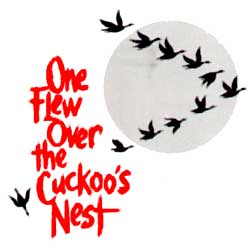
One Flew Over the Cuckoo's Nest
Jack Nicholson as R.P McMurphy is probably one of the smartest casting choices of all time. He embodies the spirit of everybody's favourite mental case with ease and humour. However, there's a reason why this is Ken Kesey's best (really only) known work. The descriptions of the mental hospital through the eyes of Chief Bromden symbolizes a mechanical society whereby the various cogs and wheels operate in the veil of a fog. Such utter awareness of the helplessness of not only those under Nurse Ratched's watch, but even those outside of the hospital, is an insightful, conscious truth that the movie alone simply does not achieve.
Harry Potter

Like the LOTR series, JK's magical world has been brought to the larger screen in amazing ways with the help of modern cinematology. But her character creations we have all come to know and love embody the Globe and Mail's point that one cannot truly understand characters by viewing them only externally. Rowling's descriptions so lovingly placed on every page form well rounded, substantial and relatable teenagers who are made all the more so by a peek into their reasoning the Harry Potter books provide. Watching them cast spells in the theatre just doesn't produce the same effect.
12 Years a Slave

Admittedly, Steve McQueen does a fantastic job of capturing the spirit and essence of Solomon Northup's experience of tragedy and resilience. And while I found myself sobbing in the theatre upon actually seeing the horrors the book describes come to life in front of me, the movie itself could not compare to Northup's personal and primary expressive recount of his terrible experiences in captivity.
Baz Lurman's Romeo and Juliet
An odd favourite, yes, but I do love all the colours and that Desiree song playing during the fish tank scene is killer. As a loyal Shakespearean I maintain that no, nothing will beat Will's original work (flawed though it may be). But Baz Lurman's film interpretation catapults the age old story into a modern realm for the 20th century teens of now (or then...since it was released in the mid 1990s). From Romeo taking E to Mercutio dressed in drag, Lurman adds trim, tassle and humour to a play studied too seriously when really, there is much absurdity in the storyline that is often overlooked and not embraced. (Hey, even Shakespeare wasn't perfect)
Have suggestions of your own? We would love you to share them with us!
Gotta Book (or should I say Mook?) It,
JEM
The Globe and Mail man (whose name I was obviously too distracted to catch) insightfully notes the benefits of both reading the book and watching the book's film adaptation (and here my ambiguous "the" refers not only to Martin's series, but to works of literature in general). Now for an English major like myself, who worships the literary above all else, reading the book is usually a given. Sure, sometimes I see the movie first: at which point my interest in the story is sparked enough to persuade me to pick up the original source. Then there are the movies that I absolutely refuse to watch until I have read the book for which they are named (The Divergent series, The Book Thief, Anna Karenina...the film version of which is potentially doomed never to be seen by me because of the simple fact that Russians tend to write really long, complex novels that a born-again grad student cannot always get through on her "free time").
I am not delusional enough to think that my literary obsession is universal. Rather, I have heard many a high school student say "I'll just rent the movie" in regards to that week's reading assignment. I continue to feel now, as I did then, that those students are doing themselves a real disservice in skipping over the print words of the author for that which is usually a visual, unequal paraphrase of great work. But the Globe and Mail's relatively unique commentary on this seemingly exhausted debate makes me think that even my unquestionable siding with books may not be the best method available to get the most out of a literary idea.
I suppose the first thing to consider in the "movies are second hand" opinion is the amazing developments in technology that have come to pass in the last few decades. Movie makers can create images and scenes, that could only have been imagined many years ago, through the help of CGI and lots of other cool Avatar-esque additions to the world of cinematography. The alien invasions, city destruction and global wars that authors imagine are now capable of being brought to life in a way that closely mirrors our concept of reality: a significant step up from the default gun-goes-pew-pew attempts at action of other technology-deficient eras. These advancements have achieved wonders in making a book's film adaptation highly compatible and competitive with the original work, as what we imagine when reading the words is more likely than ever to appear on the silver screen, just as we imagined it.
The wonderful world of technology is one point the Globe and Mail makes in favour of "watching the movie". On the flip side of the coin, the G&M video insists that reading the book is what creates the most authentic impression of the settings and the characters, and the best medium by which the audience can truly understand and get a sense of the story. The movie is then the perfect compatriot for allowing one to see the visualization of the words on the page. And no, the silver screen is not always going to get it right, especially since the beauty of reading is that each person is allowed to imagine whatever they want. But seeing the movie in conjunction with reading the book does allow one to formulate that individual "mind movie" before comparing it against Hollywood's version. At the very least, the movie can be a guide on "what not to do", but on the more pleasant occasions, film adaptations of literature can ignite a surprising "hey I never thought of that" that never would have been acknowledged had one only read the book and never seen the movie.
At the same time, those who insist on only seeing the movie and not reading the book are left wanting, especially in the case of first person narratives. Consider Katniss in The Hunger Games, or, for the sake of continuity, any of the main characters in A Song if Ice and Fire. Their first person narratives are limitless, streams of consciousness about their impressions of other characters and the scenes going on around them, that the third person lens of the movie camera simply cannot capture. Reading a character's own account of their circumstances lends to an understanding behind their motives for the actions we see them perform on screen. The novel, in this case, is the "soul" while the movie is the "body", and while Descartes might have argued them to be separate entities, both are vital to the overall make-up of a great work (person...plot...whatever). So I ask you not to consider book vs. movie, movie vs. book but instead allow the two to exist in harmony with equal audienceship: Bovie Mook.
There are certain stories whose film adaptations (I would argue) make an excellent complement to the written work and together, the two embody the completeness of an interior and exterior whole. Here's a short list of some of my favourites:
LOTR
A prime example of how the magic of technology can transform green screens into the vast plains of Middle Earth, and how Andy Cerkis attached to tiny censors becomes the creepy yet beloved Gollum. While Tolkien is an "every blade of grass" kind of writer, the movies make a gallant and magnificent attempt to capture the meticulous details of his mythological realm. But it's pretty much impossible to make sense of every race and family line without reading the series.
One Flew Over the Cuckoo's Nest
Jack Nicholson as R.P McMurphy is probably one of the smartest casting choices of all time. He embodies the spirit of everybody's favourite mental case with ease and humour. However, there's a reason why this is Ken Kesey's best (really only) known work. The descriptions of the mental hospital through the eyes of Chief Bromden symbolizes a mechanical society whereby the various cogs and wheels operate in the veil of a fog. Such utter awareness of the helplessness of not only those under Nurse Ratched's watch, but even those outside of the hospital, is an insightful, conscious truth that the movie alone simply does not achieve.
Harry Potter
Like the LOTR series, JK's magical world has been brought to the larger screen in amazing ways with the help of modern cinematology. But her character creations we have all come to know and love embody the Globe and Mail's point that one cannot truly understand characters by viewing them only externally. Rowling's descriptions so lovingly placed on every page form well rounded, substantial and relatable teenagers who are made all the more so by a peek into their reasoning the Harry Potter books provide. Watching them cast spells in the theatre just doesn't produce the same effect.
12 Years a Slave
Admittedly, Steve McQueen does a fantastic job of capturing the spirit and essence of Solomon Northup's experience of tragedy and resilience. And while I found myself sobbing in the theatre upon actually seeing the horrors the book describes come to life in front of me, the movie itself could not compare to Northup's personal and primary expressive recount of his terrible experiences in captivity.
Baz Lurman's Romeo and Juliet
An odd favourite, yes, but I do love all the colours and that Desiree song playing during the fish tank scene is killer. As a loyal Shakespearean I maintain that no, nothing will beat Will's original work (flawed though it may be). But Baz Lurman's film interpretation catapults the age old story into a modern realm for the 20th century teens of now (or then...since it was released in the mid 1990s). From Romeo taking E to Mercutio dressed in drag, Lurman adds trim, tassle and humour to a play studied too seriously when really, there is much absurdity in the storyline that is often overlooked and not embraced. (Hey, even Shakespeare wasn't perfect)
Have suggestions of your own? We would love you to share them with us!
Gotta Book (or should I say Mook?) It,
JEM
Friday, 7 February 2014
The February Novel
In late January, there was a rare gathering of friends from all across Ontario and Quebec. We managed to squeeze in almost a full 48 hours together before the grown-ups had to return to their jobs and the "adult children at home" had to get back to their fruitless job hunting. It was a magical weekend; we often see one another one-on-one, but for almost the whole gang to be in the same room again was intensely special.
We weren't what I'd call a "dorky" crew during our undergrad days; sure, we did well at school, but we also drank like fish and smoked and passed out in weird places and dated hot heart-breakers. Normal BA stuff.
But as we sat around in my bud's living room, getting progressively drunker on cheap beer and even cheaper wine, the conversation - which had started with normal catching up- quickly took on a literary tone.
It was probably one of the most genuine, enthusiastic talks I've ever had with this group and that's saying something, because this crew consists of some of my very best friends. Everybody- guys and girls- just wanted to talk about what they were reading now, what they'd read back then, which books were going to make great movies, and what they'd write if they had the chance. Keep in mind, only one of us there (me) is a self-identified "writer". We were a motley crew of history majors, education majors, sociology & poli-sci double majors and one long English major. Who woulda thunk we'd come together over books?
Anyway, the drinks kept flowing and some revelations were revealed. Apparently, a lot of us used to write when we were younger. I didn't share with the gang that I had just recently tossed all my high school notebooks, including the 350 hand-written page notebook.
But at some point between the fourth and fifth glasses of Red, one of my adorable teacher friends piped up: "Hey! We should all write novels in February!"
And so a pact was made: we would each shoot for 1,000 words a day, from February 1-28th, resulting in a short novel approximately 28,000 words long. At the end of the month, we'll share our novels with each other. So I should have four novels to read by month's end.
We're now seven days into February and most of us admittedly are rather behind. Personally, I only have about 1,300 words so far. BUT I'm loving actually writing again. My brain is constantly churning, searching for inspiration, filing away ideas for later... it's like a winter miracle. In fact, I'm rushing this post a little so that I can procrastinate on job hunting and get writing again! I might even enter the draft in a contest or something, if it holds up after editing. If not, at least I got my writer's mojo back.
If you want to write a February Novel: it's not too late!
1. Don't waste time comparing ideas, paralyzed by the thought of "choosing the wrong one". Just pick something and go with it. I was afraid to write a cop novel because I thought I was limiting myself with the genre. I was also worried about writing something that the guys wouldn't want to read. That was just an excuse to not get started earlier.
2. Just write; don't edit. Some people are getting bogged down thinking their words are crap-- that's not the point of the exercise. In this case, we really are going for quantity not quality. Because as a writer, you're your own worst enemy.
3. Set a reasonable goal, like say 500 words a day. Don't beat yourself up if you miss a day-- and don't stop if you're on a roll!
4. Do it with someone! A lover, a friend, your book club. You'll need someone to hold you accountable, and I am literally SO STOKED to read my friends' novels. This is definitely a project that's meant to be shared.
5. Tweet, instagram, pin and let us know how your own #FebruaryNovel is coming along.
Gotta book it
xox
JEM
We weren't what I'd call a "dorky" crew during our undergrad days; sure, we did well at school, but we also drank like fish and smoked and passed out in weird places and dated hot heart-breakers. Normal BA stuff.
But as we sat around in my bud's living room, getting progressively drunker on cheap beer and even cheaper wine, the conversation - which had started with normal catching up- quickly took on a literary tone.
It was probably one of the most genuine, enthusiastic talks I've ever had with this group and that's saying something, because this crew consists of some of my very best friends. Everybody- guys and girls- just wanted to talk about what they were reading now, what they'd read back then, which books were going to make great movies, and what they'd write if they had the chance. Keep in mind, only one of us there (me) is a self-identified "writer". We were a motley crew of history majors, education majors, sociology & poli-sci double majors and one long English major. Who woulda thunk we'd come together over books?
Anyway, the drinks kept flowing and some revelations were revealed. Apparently, a lot of us used to write when we were younger. I didn't share with the gang that I had just recently tossed all my high school notebooks, including the 350 hand-written page notebook.
But at some point between the fourth and fifth glasses of Red, one of my adorable teacher friends piped up: "Hey! We should all write novels in February!"
And so a pact was made: we would each shoot for 1,000 words a day, from February 1-28th, resulting in a short novel approximately 28,000 words long. At the end of the month, we'll share our novels with each other. So I should have four novels to read by month's end.
We're now seven days into February and most of us admittedly are rather behind. Personally, I only have about 1,300 words so far. BUT I'm loving actually writing again. My brain is constantly churning, searching for inspiration, filing away ideas for later... it's like a winter miracle. In fact, I'm rushing this post a little so that I can procrastinate on job hunting and get writing again! I might even enter the draft in a contest or something, if it holds up after editing. If not, at least I got my writer's mojo back.
If you want to write a February Novel: it's not too late!
1. Don't waste time comparing ideas, paralyzed by the thought of "choosing the wrong one". Just pick something and go with it. I was afraid to write a cop novel because I thought I was limiting myself with the genre. I was also worried about writing something that the guys wouldn't want to read. That was just an excuse to not get started earlier.
2. Just write; don't edit. Some people are getting bogged down thinking their words are crap-- that's not the point of the exercise. In this case, we really are going for quantity not quality. Because as a writer, you're your own worst enemy.
3. Set a reasonable goal, like say 500 words a day. Don't beat yourself up if you miss a day-- and don't stop if you're on a roll!
4. Do it with someone! A lover, a friend, your book club. You'll need someone to hold you accountable, and I am literally SO STOKED to read my friends' novels. This is definitely a project that's meant to be shared.
5. Tweet, instagram, pin and let us know how your own #FebruaryNovel is coming along.
Gotta book it
xox
JEM
Labels:
activities,
author,
book,
bookish,
career,
create,
february,
FebruaryNovel,
literature,
nerds,
novellife,
novels,
try,
winterblues,
write,
writers
Tuesday, 28 January 2014
Book Review: The Rosie Project
WTD Rating: 3.5 stars
Quick Advice: An easy and enjoyable read despite a problematic characterization of an individual with Asberger's Syndrome.
Warning: Mild Plot Spoilers (AKA I discuss a few events in the book without ruining the ending)
Quick Advice: An easy and enjoyable read despite a problematic characterization of an individual with Asberger's Syndrome.
Warning: Mild Plot Spoilers (AKA I discuss a few events in the book without ruining the ending)
![]() |
| The Rosie Project Source: chrisbookarama |
I feel like I heard so
much about Graeme Simsion’s debut novel The
Rosie Project this summer. I
bought Where’d You Go Bernadette for
a girlfriend’s birthday and the cashier said upon seeing my selection “have you
read The Rosie Project? I think you’d
like it too!” Ever since then I've been wanting to read it! I bought The Rosie Project for my mom for Christmas who read it with her book
club and passed it on to me last week. At the same time she also gave me The 100 Year Old Man Who Climbed Out the
Window and Disappeared. When I
asked her which to read first she said “The
Rosie Project is an easy read but I have to say I preferred The 100 Year Old Man”. She didn’t
elaborate but my hunch is that being a retired social work professor her
reaction to The Rosie Project may be
in part due to what I noted as a highly problematic oversimplification of an individual with Asperger’s
syndrome.
![]() |
| Love this hardcover copy of the book! Source: tea-drinkingbookloverdiary |
It seems readers either loved
or hated this book but the vast majority of Goodreads readers seemed to love it! Reactions
range from overwhelming admiration to shameful disgust in regards to how Simsion
characterized the protagonist Professor Don Tillman. Don is a Professor, researcher, excellent cook, enthusiastic drinker and karate blackbelt who lives by a strict, unflinching schedule until he realizes its time to find himself a wife and thus begins The Wife Project and the total upheaval of his structured, predictable life.
Don is an indivudual who is living with Asperger’s syndrome. I don’t have a
comprehensive understanding of Asperger’s syndrome however a google search of legitimate
sources explains that it is an “autism spectrum disorder (ASD) considered to be on the
“high functioning” end of the spectrum” (Austism Speaks).
The Mayo Clinic (a great go-to medical source) states “Asperger's
syndrome is a developmental disorder that affects a person's ability to
socialize and communicate effectively with others” (The Mayo Clinic).
Asperger’s
is a neurological condition that is more common in males and is regarded as a developmental
disorder.
According to Behaviour Consultant, "idiosyncratic interests are common and may take the form of an unusual and/or
highly circumscribed interest (e.g., in train schedules, snakes, the weather,
deep-fry cookers, or telegraph pole insulators)" (Behaviour Consultant).
Simsion certainly integrates the social behaviours and the idiosyncratic interests into Don's character in
The Rosie Project.
Don is
never diagnosed with Asperger’s and never self-identifies as having
the syndrome in The Rosie Project.
However, Asperger’s comes up frequently in the text through Don’s research in genetics. When
he finishes a presentation on Asperger’s in the beginning of the text the facilitator
says pointedly to him: “remind you of anyone?”. Late in the text he does list
his symptoms without coming to any concrete conclusions; he actually uses his symptoms
as a method of analyzing what he needs to change in order to “get the girl”. This
approach was really disappointing to me as a reader. Instead of having to
change to find love I wish Don could have found love as himself. He accepts and
loves Rosie despite being unsuitable for The Wife Project however he realizes
that he will never be suitable to a woman without purposefully altering his social behaviour.
Simsion’s explains his characterization of Don in an
interview stating: “I didn’t want Don to be a syndrome. I wanted a living,
walking character” (Library Journal).
The NY Times review states that Simsion “reminds
us that people who are neurologically atypical have many of the same concerns
as the rest of us: companionship, ethics, alcohol” (The New York Times). Obviously, my interpretation is completely opposite to that of Simsion and the NY Times. Where they see a normalization humanization of an
"atypical" human being I see an author using stereotypical behaviour before manipulating and changing a character for the end result: love.
The Goodreads synopsis calls The Rosie Project “an
international sensation, this hilarious, feel-good novel is narrated by an
oddly charming and socially challenged genetics professor” (Goodreads). Truthfully,
I can’t say I “felt good” after finishing it; I felt unsatisfied. Even the use
of the descriptor “oddly charming” is a problematic to me. Why do we need to use language like "odd"? Instead of breaking
down barriers and raising awareness Simsion deeks, ducks and avoids the critical
issues raised by the book. After the first chapter I said to my boyfriend, Don
is Sheldon Cooper from the Big Bang Theory. Think about it: ShelDON. We find his quirks and personality
traits “funny” and laugh at him when he makes inappropriate comments in public or has a chair or spot he has to sit in. Both characters are “weird” and unfortunately society likes
to laugh at weirdness instead of trying to accept and understand. Don Tillman is the literary Sheldon Cooper who studies genetics instead
of Physics and makes his own food on a strict weekly schedule instead of eating pre-determined
takeout. All I can hear in my head now is Sheldon's vhoice exclaming "on Friday nights we eat Chinese food!"
![]() |
| Don's Sexy Literary Look-a-Like Atticus Finch (Gregory Peck) |
Despite the problematic portrayal of the main character I
have to say The Rosie Project can be very endearing at times. For a novel that was
supposed to be a screenplay and was written in only four weeks Simsion
accomplishes a lot. The book is wildly popular and is making its rounds throughout
the world. The three focal projects: The Wife Project, The Father Project and
The Rosie Project are all entertaining and I thorougly enjoyed the simple structure of
the book. On the surface, The Rosie
Project is an easy and enjoyable read. I liked the chemistry between Don
and Rosie and the adventures they experience together are funny and charming. I felt a fondness and appreciation for Don and they way he lives his life. I
don’t discourage you from reading the book I simply want to re-enforce what I
always enforce as an English major; read critically and always ask questions!
PS: If you loved The Rosie Project comment or tweet us! We love a good book discussion and welcome your thoughts and feedback.
Monday, 6 January 2014
Book Review: To Whisper Her Name - Tamera Alexander
![]() |
| Source: Goodreads |
To Whisper Her Name is a historical romance set in the South after the Civil War on a Thoroughbred breeding facility and plantation in Nashville, Tennessee. My cousin visited Belle Meade this summer while on vacation in Nashville and purchased the book as a Christmas gift for me. Her photos of the house and surrounding buildings are absolutely breathtaking and a total horse-lovers dream so I was curious to what a writer would do with a story about the place.
Before reading To
Whisper Her Name I had a somewhat patchy understanding of the American Civil
War. While I have studied Canadian-American history I have never had the
opportunity to take any American history classes during my Academic career. The text is an excellent
source for understanding the tension and the politics of the time and Alexander
provides an insight into history that is reflective and thought
provoking. She does an excellent job of representing the thoughts and opinions of all characters through description and dialogue. Topics including race, religion, gender roles, class status and history are all tackled effortlessly by the text.
The protagonist, Olivia Aberdeen, is the widow of a cruel and vastly
disliked man who was brutally murdered by his his fellow townspeople after the war.
With nothing left to her name Olivia is shunned from society and moves to Belle
Meade where her Aunt and Uncle provide her with a safe place to stay. In
exchange, Olivia is required to be the companion to her beloved Aunt who, as she learns upon her arrival, is dying. Ridley
Cooper, Olivia’s ruggedly handsome love interest, finds his way to Belle Meade in
search of a former slave he met during the war. Cooper fought on the “wrong"
side of the war (Union) and has to keep his identity a secret from the
plantation owner and passionate Southerner Mr. Harding. Robert Green, the former slave, is perhaps the
most intriguing character in the text. In the Afterword Alexander admits to falling slightly in love with Green while writing the text and I have to say so did I. Also known as Uncle Bob, the head-horse
trainer and real-life horse-whisperer is
still renowned for his amazing gift with horses today. As an equestrian, some of my favourite passages were those that depicted
Mr. Green’s philosophies and training techniques as he tries to teach impatient Cooper to work with horses.
| Robert "Uncle Bob" Green Source: Wikipedia |
Despite a few cringe-worthy metaphors and never-ending
descriptions, the book managed to capture my attention and I have to admit it
was a nice change of pace from what I’ve been reading lately. Alexander’s characters
are endearing and she manages to weave several captivating sub-plots and minor
characters into what could have been a bland read as we wait for the romance
between Olivia and Ridley to blossom. Despite their slow-starting, sometimes irritating romance, both hero and heroine have other (more interesting) adventures during their respective stays at Belle Meade. Olivia obtains a paid position at the plantation, teaches at a freedman school, fosters strong relationships with her Aunt, Uncle and cousins and learns about alternative medicine. Ridley desires to learn everything he can from Bob Green before moving West and devotes himself to working with horses. Ridley is well-liked by Mr. Harding for his strong spirit and is soon promoted to Foreman for his hard work and dedication.
Interestingly, Olivia
is the only character in To Whisper Her Name that is hard to like; she has several character flaws
which I thought would be overcome and resolved but they never are. These include a fear of horses which
is mediated upon to a tiresome degree, an overly formal method of speaking and
acting and a refusal to let the past go. Perhaps, hopefully, this character will experience some personal
growth in the second book in the series.
At just over 430 pages, To Whisper Her Name is a long read and sometimes
feels as though it simply won’t end. Luckily, I was on the beach in Cuba and so
I was able to get through it quite quickly and with little distraction. I may
not have enjoyed it as much otherwise but with the sun and ocean before me I
was quite content with the storyline and grew fond of the characters and rich
history. If historical romance is your favourite
genre I highly recommend the text and if it’s not I would say it’s still a
contender for a vacation read as it provides interesting insight into a very specific period of American history.
Alexander’s website has several videos that offer further insight
into Belle Meade and the historical characters
including the romantic hero and heroine, head hostler and the role Belle Meade
had in the development of Thoroughbred history. There is also a .pdf excerpt from the book for
you to browse through if you’re not sure whether or not To Whisper Her Name is for you.. I have to admit I'm looking forward to book two which is due to come out in early 2014!
![]() |
| Belle Meade Source: Architecture |
Tamera Alexander's website: http://www.tameraalexander.com/bellemeadeplantationnovels.html
Belle Meade Plantation website: http://bellemeadeplantation.com/
Wednesday, 18 December 2013
The 10 Best Literary Christmas Quotations (According to Us)
There is nothing better than reading about Christmas in your favourite literature! A truly good book can get you in the mood for December even on a sunny August afternoon. So sit back, relax and take in my list of the ten best literary chrsitmas quotes. Don't agree? Repond with your favourite quotations in the comments!
![]() |
| Source: We Heart It |
A special thank you to Goodreads and Google which made compiling this
list of quotations ridiculously easy on this snowy December morning!
10.)
![]() |
| Source: School Library Journal |
“Always winter but never Christmas.”
― C.S. Lewis, The Lion, the Witch and the Wardrobe
9.)
![]() |
| Source: byubookstore |
“I mean the baronet and the rector, not our brothers—but the former, who
hate each other all the year round, become quite loving at Christmas.”
― William Makepeace Thackeray, Vanity Fair
8.)
![]() |
| Source: Wikipedia |
“Mistletoe," said Luna dreamily, pointing at a large
clump of white berries placed almost over Harry's head. He jumped out from
under it.
"Good thinking," said Luna seriously. "It's often infested with
nargles.”
― J.K. Rowling, Harry Potter and the Order of the Phoenix
7.)
“I sincerely hope your Christmas in Hertfordshire may abound in the
gaieties which that season generally brings, and that your beaux will be
so numerous as to prevent your feeling the loss of the three of whom we
shall deprive you.”
― Jane Austen, Pride and Prejudice
6.)
“CALVIN:
This whole Santa Claus thing just doesn't make sense. Why all the
secrecy? Why
all the mystery? If the guy exists why doesn't he ever show himself and
prove it? And if he doesn't exist what's the meaning of all this?
HOBBES: I dunno. Isn't this a religious holiday?
CALVIN: Yeah, but actually, I've got the same questions about God.”
― Bill Watterson
CALVIN: Yeah, but actually, I've got the same questions about God.”
― Bill Watterson
5.)
![]() |
| Source: The Literary Snob |
“But at Christmas he had returned to Minneapolis, tight-lipped and strangely jubilant.”
― F. Scott Fitzgerald, This Side of Paradise
4.)
“He went
to the church, and walked about the streets, and watched the people hurrying to
and for, and patted the children on the head, and questioned beggars, and
looked down into the kitchens of homes, and up to the windows, and found that
everything could yield him pleasure. He had never dreamed of any walk, that
anything, could give him so much happiness.”
― Charles Dickens, A Christmas Carol |
3.)
![]() |
| Source: MsJacoby |
“At one time, most of my friends could hear the bell, but as years
passed, it fell silent for all of them. Even Sarah found one Christmas that she
could no longer hear its sweet sound. Though I've grown old, the bell still
rings for me, as it does for all who truly believe.”
― Chris Van Allsburg, The Polar Express
2.)
“Then the Grinch thought of something he hadn't before! What
if Christmas, he thought, doesn't come from a store. What if Christmas...perhaps...means
a little bit more!”
― Dr. Seuss, How the Grinch Stole Christmas!
1.)
![]() |
| Source: Wikipedia |
“One can never have enough socks," said Dumbledore.
"Another Christmas has come and gone and I didn't get a single pair.
People will insist on giving me books.”
― J.K. Rowling, Harry Potter and the Sorcerer's Stone
Subscribe to:
Posts (Atom)


+1.jpg)